
Small-molecule NNMT inhibitor — not a peptide
5-Amino-1MQ
5-amino-1-methylquinolinium
Preclinical / not FDA-approvedAn experimental small molecule used in nicotinamide N-methyltransferase research. Despite appearing in peptide catalogs, it is not a peptide.
FULL RESEARCH GRAPHIC
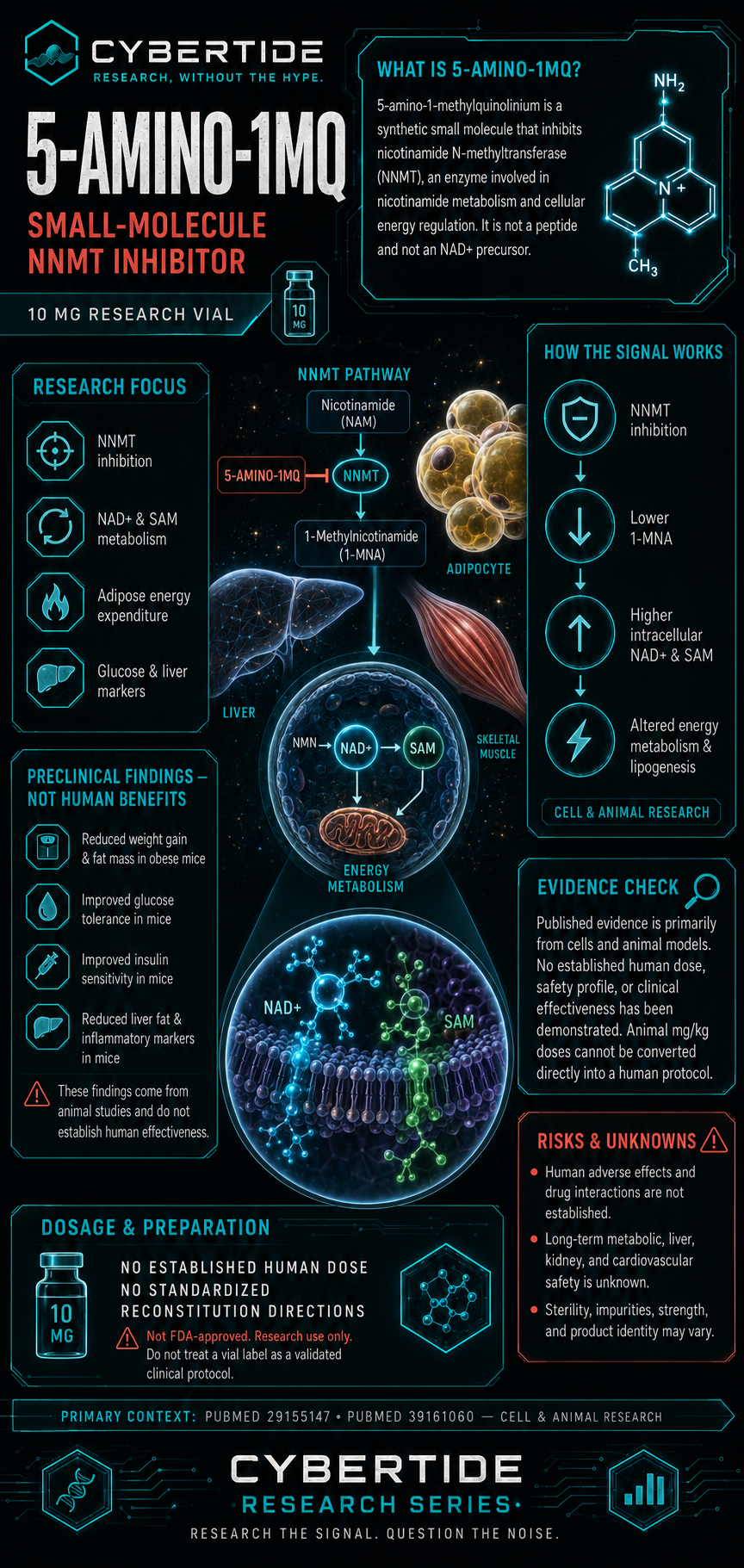
5-Amino-1MQ research overview
A phone-readable overview of NNMT inhibition, preclinical metabolic findings, evidence limits, and unresolved human safety questions.
Tap the graphic to open the full-resolution version.
RESEARCH SIGNAL MAP
04 ACTIVE FIELDSEVIDENCE READOUT
Preclinical / not FDA-approvedAnimal research reports reduced fat-mass gain, improved glucose tolerance and insulin sensitivity, and effects on cellular NAD+ availability. Human benefits and dosing have not been established.
BOUNDARY CHECK
CONTEXT REQUIREDA laboratory identity or purity result does not convert 5-Amino-1MQ into an approved medicine or validate a human-use protocol.
10 MG VIAL REFERENCE
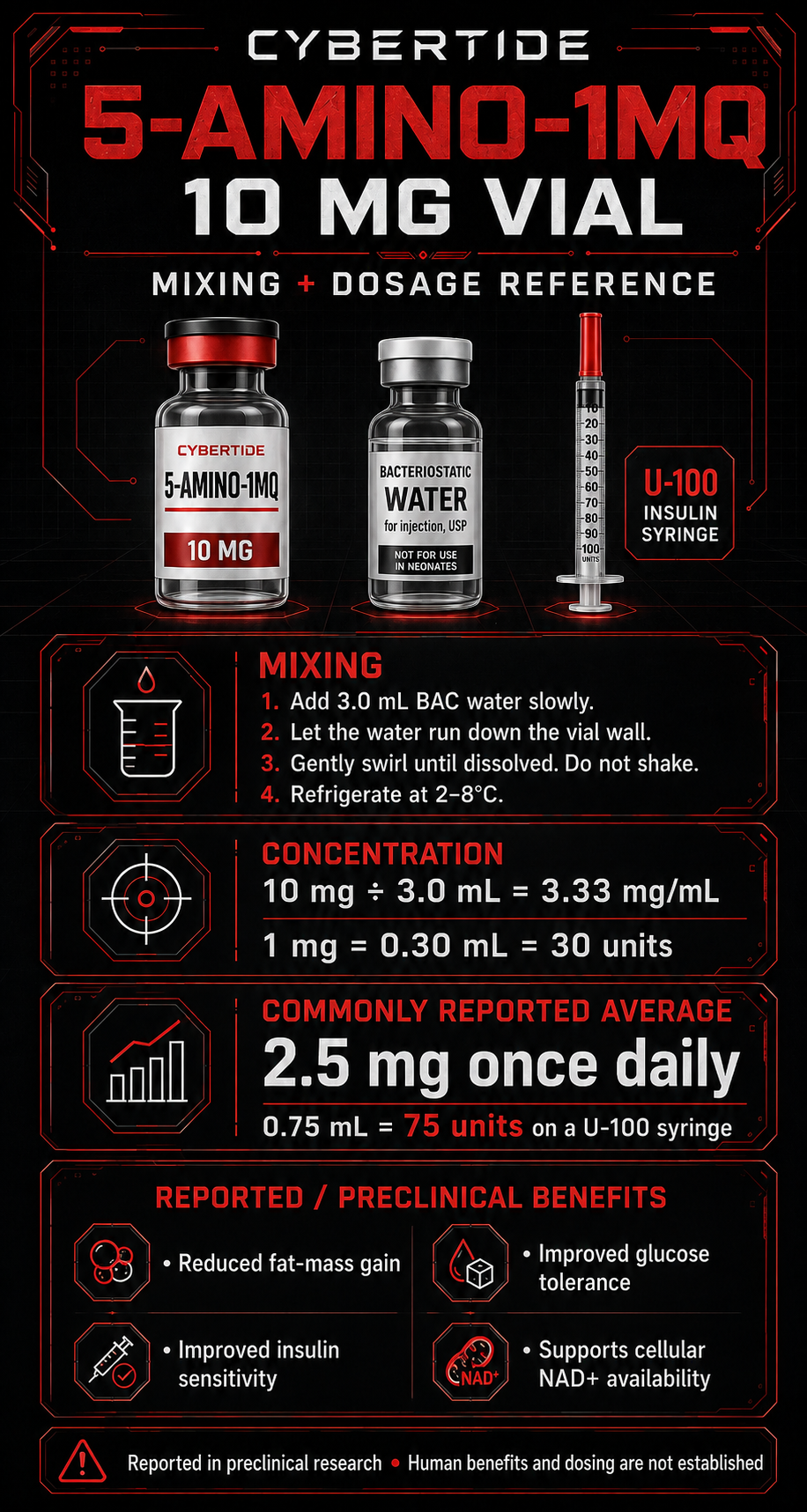
Mixing, average use, and reported benefits
The complete 3 mL BAC-water conversion is kept in one phone-readable graphic, followed immediately by the exact-lot laboratory record currently on file.
Tap the graphic to open the full-resolution version.
SUBMITTED LAB DOCUMENTS
Test results
Reports may describe other strengths or blends. Match the labeled amount, composition, and exact lot to your vial. A report for another strength does not verify your vial. Each record identifies whether an exact lot was supplied.
VIAL REFERENCE
3 mL mixing math & dosing context
Every number is labeled by evidence level. The 3 mL reference calculates concentration and U-100 volume; it does not prove solvent compatibility, sterility, stability, or suitability for injection.
10 mg vial
Change the liquid. See the amount.
Calculation only: vial amount ÷ liquid volume × draw volume. It does not determine what dose to use or confirm product compatibility.
3.0 mL BAC-water workflow
- First confirm that bacteriostatic water and a 3.0 mL final volume are compatible with the exact product and vial capacity.
- Clean both vial stoppers with alcohol and allow them to dry.
- Add the 3.0 mL slowly down the inside wall instead of directing pressure onto the powder.
- Gently roll or swirl until dissolved; do not shake.
- Use product-specific refrigeration and discard guidance. If none exists, do not invent a beyond-use date.
Commonly reported average: 2.5 mg daily
Community injection protocols commonly place 2.5 mg at the starting or average daily amount. No human clinical trial has established that dose, route, effectiveness, or safety.
Primary research — preclinical NNMT inhibition ↗U-100 means 100 units = 1.0 mL. Any table result above 100 units exceeds one standard 1 mL U-100 syringe.